CN(CNY)
 FR(EUR)
 GB(GBP)
 CA(CAD)
 AU(AUD)
 AE(AED)
 JP(JPY)
 KR(KRW)
 PH(PHP)
JCDL Turbo blog
《Symptoms of a Failing Turbocharger》
- Oct.09, 2025 00:00:00
- 0 Comments
1. Significant Loss of Power (The "Boost" is Gone)
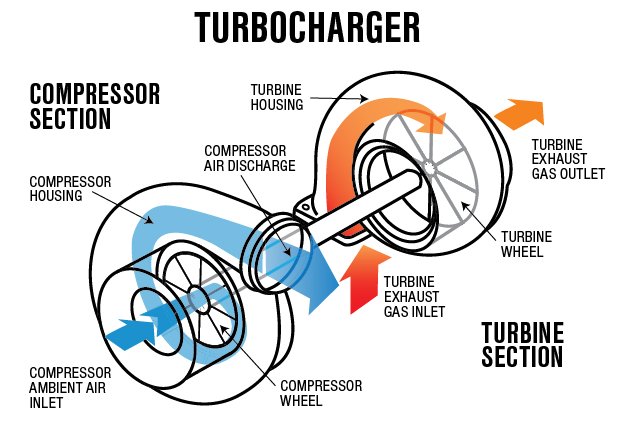
What it feels like: Your car feels sluggish and unresponsive, especially when you accelerate. It struggles to maintain speed on inclines and feels like it's lost its "get-up-and-go." This is often the first and most noticeable symptom.
Why it happens: The turbo's job is to create boost. If there's a leak in the intake system (a cracked intercooler, loose hose), a clog, or worn internal components like the turbine blades, it cannot build the necessary pressure. The engine is effectively "naturally aspirated" again, and you feel the significant power loss.
2. Excessive Exhaust Smoke
The color of the smoke is a critical clue:
Blue/Grey Smoke: This indicates that engine oil is being burned.
Why it happens: Oil is meant to lubricate the turbo's central shaft. Worn seals or bearings allow this oil to leak into either the intake side (where it's sucked into the combustion chambers) or the exhaust side (where it's burned off). Both result in blue smoke and a distinct burning oil smell.
Black Smoke: This signifies an overly rich fuel mixture (too much fuel, not enough air).
Why it happens: If the turbo isn't providing enough air, the engine's computer dumps in extra fuel to compensate, which doesn't get fully burned. This can be caused by a boost leak or a clogged air filter.
3. The Dreaded "Check Engine" Light
What it means: Modern engines are covered with sensors. A problem with the turbocharging system will likely trigger the check engine light.
Why it happens: Sensors like the MAP (Manifold Absolute Pressure) sensor or MAF (Mass Air Flow) sensor detect that the actual air pressure/flow doesn't match what the engine computer expects. Common trouble codes include P0299 (Turbo/Supercharger Underboost) or P0234 (Overboost Condition).
4. Loud Siren or Whistling Noises
What it sounds like: A high-pitched whining, whistling, or siren-like noise that gets louder as you accelerate. This is very different from the normal, subtle turbo spool.
Why it happens: This is almost always a symptom of an air leak. A cracked turbo housing, a damaged impeller blade scraping against the housing, or a leak in the intake or intercooler piping can create this distinct sound. Ignoring it can lead to the turbo disintegrating entirely.
5. Increased Oil Consumption
What you'll notice: You're having to top up your engine oil much more frequently between service intervals, but there are no visible oil puddles under your car.
Why it happens: As mentioned with blue smoke, worn turbo seals allow oil to be sucked into the engine and burned. The oil is disappearing internally, leading to high consumption without external leaks.
6. Poor Fuel Economy
What it feels like: You're visiting the gas station more often than usual, even with your normal driving habits.
Why it happens: When the turbo isn't working efficiently, the engine has to work harder to produce the same amount of power. This means injecting more fuel, which directly leads to a drop in miles per gallon (MPG).
What to Do If You Notice These Symptoms
Don't Ignore It! Continuing to drive a failing turbo can send metal debris from the turbo into your engine, causing irreversible damage.
Get a Professional Diagnosis. Take your vehicle to a trusted mechanic. The symptoms above can sometimes be caused by other issues (e.g., a boost leak vs. a dead turbo), and a professional can pinpoint the exact cause.
Consider a Quality Replacement. If your turbo is indeed failing, insist on a high-quality replacement part. While cheap, no-name turbos are tempting, they often fail prematurely. Opt for a genuine or OEM-quality turbocharger for longevity and performance.
Conclusion: Listen to Your Car
Your vehicle often tells you when something is wrong. Paying attention to these symptoms of a failing turbocharger—the power loss, the strange noises, and the tell-tale smoke—can be the difference between a manageable repair and a financial nightmare. Act early, diagnose properly, and keep your engine running strong.
Post Comment
Your email address will not be published.Required fields are marked. *
We and our partners use cookies and other technologies to improve your experience, measure performance, and tailor marketing. Details in our Privacy Policy.